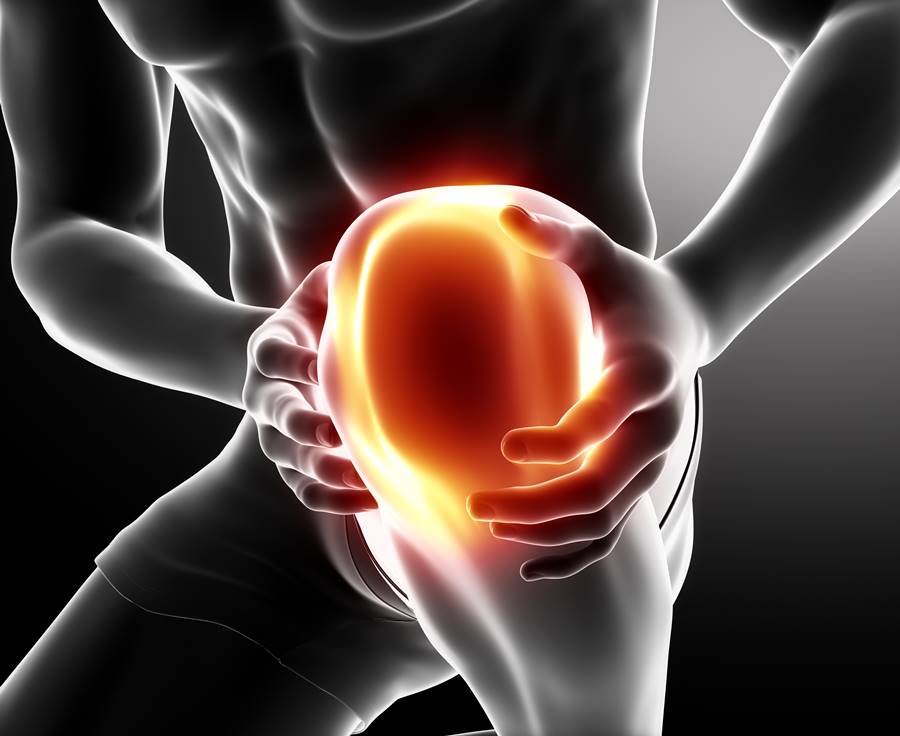
When your knees speak, listen to them, pay attention to your body.
What would we be without our knees? If you've never wondered about this, think for a moment that you dropped something and instead of a joint called the knee, your leg is rigid and there's nothing there. Now, try to squat with your leg straight and immobile, and after doing that, you will surely ask yourself the question posed earlier.
The knee is the central joint of the hind limbs of vertebrates and is formed by two important bones: the femur at its distal end and the tibia at its proximal position. It also has a small bone called the patella, which articulates with the anterior and inferior part of the femur. It is designed primarily to perform flexion and extension movements, making it the largest joint in the body.
Like all joints, the knee is a combination of bones, ligaments, muscles, and tendons that provide it with both rigidity and flexibility. Its main movement is flexion-extension, that is: bending and straightening, though it also has a small rotational capacity when flexed. As with the rest of our body, the knees are exposed to constant physical wear, trauma caused by accidents or sports injuries, and degenerative diseases such as arthritis. Overweight can also cause knee problems since they bear a large part of our body weight.
Medical conditions.
Common knee problems include: Arthritis (rheumatoid arthritis, osteoporosis, lupus, and gout), Baker's cyst (a fluid-filled swelling located behind the knee that can be caused by other conditions), Osgood-Schlatter disease (painful swelling of the bump on the upper tibia, right under the knee), infections in knee joints or bones.
Overuse injuries or trauma.
The most common include: Bursitis (inflammation caused by repetitive pressure on the knee, such as kneeling for long periods), patellar dislocation (displacement of the patella from the joint), patella fracture or other knee bones (violent trauma), iliotibial band syndrome (injury to the thick band that runs from the hip to the outside of the knee), ligament ruptures (violent trauma), cartilage tears (meniscus tears, which act as cushions for the bones).
Risk factors.
Overweight: This increases the load on the knee joints even when just walking. It also increases the risk of osteoarthritis by accelerating cartilage breakdown.
Lack of flexibility or muscle strength: Weakness and lack of flexibility can increase the risk of knee injuries. Strong muscles help stabilize and protect joints, and muscular flexibility can help achieve full range of motion.
Certain sports: Some sports put more strain on your knees than others: alpine skiing, with rigid ski boots and the potential for falls, basketball jumps and pivots, and the repeated impact absorbed by your knees while running or jogging all increase the risk of knee injuries.
Previous injury: Having a prior knee injury makes it more likely that you'll injure your knee again.
Recovery.
It goes without saying that the recovery depends on the type of injury, and the solution could range from surgery to rehabilitation through physiotherapy. But regardless of the case, the use of knee braces is always important to ensure proper rehabilitation.
Why knee braces?
Knee braces stabilize and control the joint's movement by applying pressure for proper rehabilitation. They also help relieve pain and inflammation. It's important to note that knee braces can be perfectly used for injury prevention due to the compression they exert, which allows mobility but limits bone displacement and overloading of ligaments (of course, knowing when it's time to rest).
The brands
Beybies,
Pura+, and
NrgyBlast belong to
Avimex de Colombia SAS. All products are certified for quality and have current health registrations, manufactured under the strictest international standards. To purchase our products, you can visit our
Shop-On Line. All purchases are backed by a 100% satisfaction guarantee or money back.